
How a Fast, Direct Note Sale Works (No Brokers, No Fees)
If you’re holding a real estate promissory note or deed of trust and you want immediate liquidity, a direct sale converts future payments into cash in days—not months. Whether your asset is performing or non-performing, a streamlined process with a principal buyer eliminates middlemen, reduces delays, and avoids extra costs. Here’s a straightforward path when you decide to sell my note.
First, share the basics: a copy of the note and mortgage or deed of trust, the unpaid principal balance, interest rate, payment schedule, and a brief payment history. If available, include the closing statement from the original sale, property address, insurance and tax status, and any recent valuation (BPO, appraisal, or broker comp). With this information, real estate note buyers can quickly underwrite your asset and produce a same-day or next-day cash offer.
Next, review the offer structure. You can choose a full sale (receiving a lump sum for all remaining payments) or a partial sale (you keep a portion of the payments or the tail balance). Partial structures are powerful when you want cash today but also want to retain some future income. If your note is non-performing, expect a different pricing model based on property value, position, and workout or foreclosure timelines, but the goal stays the same: a clean exit and fast funding.
Once you accept the bid, due diligence starts. With a direct buyer, this phase is focused and efficient—title verification, collateral file review, and a property value check. There are no broker chains or added fees. You sign standard assignment documents (Assignment of Mortgage/Deed of Trust, Allonge, and Collateral Assignment as needed). Closing is often completed in as little as 3–10 business days. Funds go by wire at closing, and servicing transitions seamlessly so your borrower receives proper notice without service disruptions.
Throughout the process, you stay in control: choose your closing date, select full or partial execution, and clarify any payoff or prepayment terms. If you need to sell my note fast, working directly with a principal buyer keeps everything simple, predictable, and fast: quick offers, clear pricing, and immediate cash on a timeline that fits your goals.
What Determines Your Note’s Cash Value and How to Maximize It
Your note’s purchase price comes down to risk, yield, and timelines. To maximize proceeds, focus on the variables that matter most to professional buyers. Start with the core terms: interest rate, unpaid principal balance (UPB), remaining term, and any balloon payment. Higher rates and shorter timelines usually price stronger because they boost yield and reduce duration risk. A well-seasoned payment history also supports value, signaling stable performance and lower default probability.
Collateral is next. Buyers evaluate the property type (single-family, multifamily, land, commercial), lien position, and current value relative to the balance—your loan-to-value (LTV). A lower LTV commands better pricing. If taxes and insurance are current and the property is in a stable or appreciating area, the asset typically prices higher. For non-performing notes, expected recovery depends heavily on foreclosure timelines and costs in your state, occupancy status, and property condition. Shorter legal timelines can mean stronger bids because capital returns faster.
Borrower profile and documentation completeness also influence value. Clear, organized files reduce diligence time and uncertainty. Provide a copy of the note, mortgage or deed of trust, payment ledger, proof of insurance, tax status, and any borrower communications or hardship letters. If you hold a second lien, evidence of the first mortgage balance and standing is critical. For commercial notes, rent rolls, leases, and operating statements help tighten underwriting and enhance price.
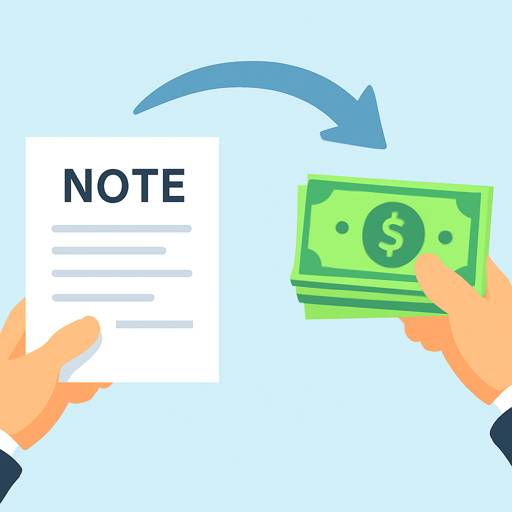
To improve your outcome, consider these practical steps: confirm taxes and insurance are current, obtain a recent BPO or appraisal if you have access, and reconcile any escrow shortages. If there are arrears, a simple forbearance or modification agreement—executed before marketing—may increase proceeds. For a deed of trust sale, ensure the Collateral Assignment and Assignment of Deed of Trust will be readily recordable. Presenting a clean collateral file can shave days off the closing timeline and support a stronger bid.
Finally, choose the right exit structure. A full sale delivers immediate liquidity and zero servicing responsibility. A partial sale lets you unlock cash today while keeping a stake in the note’s future payments. Direct real estate note buyers can customize either approach, so you walk away with the optimal balance of price, speed, and flexibility. When your priority is immediate cash for promissory note proceeds, request competing options and select the one that best matches your timeframe and tax planning.
Real-World Scenarios: Performing, Non-Performing, and Portfolio Dispositions
Performing, owner-financed single-family note. A landlord sold a rental home with 10% down and carried a first-position note at 8% interest, amortized over 25 years with a 5-year balloon. After 18 months, he wanted to redeploy capital into a new opportunity and needed speed. He solicited bids from direct buyers and selected a full sale with a 7-day close. By furnishing a clean payment ledger, insurance proof, and the original collateral file on day one, title cleared quickly, the Assignment and Allonge were signed, and funds were wired ahead of his next purchase deadline. The result: maximum speed and a competitive price with no broker fees.
Partial sale for liquidity without losing the tail. A noteholder receiving $1,100 per month chose to sell the next 60 payments and retain the remaining balance. This structure provided immediate cash while preserving a significant payoff at the balloon date. The buyer set up a new servicing arrangement to split payments as agreed, and the transaction funded in under two weeks. For sellers who value both upfront liquidity and long-term income, partials are a smart strategy—especially when interest rates or property appreciation suggest a strong future payoff.
Non-performing first lien on a duplex. A borrower fell 7 months behind. The property had equity, but the seller lacked the time and appetite to navigate a workout or foreclosure. A direct buyer priced the note based on current value, expected legal timeline, and occupancy status. After a concise diligence period confirming title, taxes, and property condition, the sale closed in 10 business days. The seller exited cleanly and immediately, avoiding further carrying costs and uncertainty, while the buyer executed a workout plan suited to the local market.
Small-balance portfolio sale. An investor with five mixed notes—three performing, two non-performing—sought a single, fast exit. Packaging the assets together delivered better overall proceeds and one closing. A buyer underwrote the pool within 72 hours, issued a firm bid, and funded in 12 days. Pool sales can compress timelines, reduce paperwork, and produce competitive pricing, particularly when the mix of assets balances risk and return for the buyer.
Local nuance still matters. In deed-of-trust states like California, Texas, Arizona, and Nevada, nonjudicial processes can accelerate timelines, often improving pricing for non-performing assets. In judicial states, legal duration and costs factor into bids; presenting complete files and any recent property inspections can offset that. Either way, the formula is consistent: clean documentation, a direct path to closing, and flexible structures that meet your priorities.
When you’re ready to act, state your objective—fastest close, highest price, or a blend—and request a written offer with clear terms. Ask for net proceeds so you know exactly what hits your account. With a principal buyer, there are no broker markups, no hidden fees, just a transparent path to close. If your goal is to sell my note fast, you can secure a same-day valuation, choose full or partial execution, and close in days with funds wired upon recording. Your future payments are valuable—convert them into cash precisely when it matters most.

Amsterdam blockchain auditor roaming Ho Chi Minh City on an electric scooter. Bianca deciphers DeFi scams, Vietnamese street-noodle economics, and Dutch cycling infrastructure hacks. She collects ceramic lucky cats and plays lo-fi sax over Bluetooth speakers at parks.
Comments are closed.